
Learn about how long-term disability lawyers get paid and how contingency fee agreements ease your out-of-pocket burden.
Written and Edited by Lawyers
All articles on DisabilitySecrets.com have been written or edited and fact-checked by our in-house attorney editors, who together have over 35 years of experience practicing and covering disability law. Learn more about our team and our editorial standards.
When you’re trying to get your long-term disability claim approved by your insurance company, you likely can’t afford to hire an attorney on an hourly or flat-fee basis. Fortunately, most attorneys who handle long-term disability (“LTD”) cases work under a contingency arrangement, meaning they collect a fee only if you win your case. Contingency fee agreements allow you to get quality legal representation without having to pay your attorney’s fees upfront.
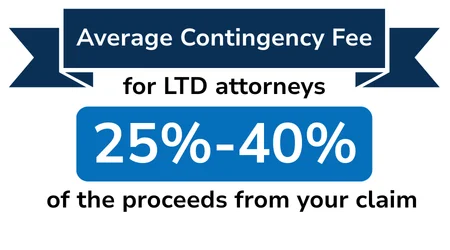
A typical contingency fee for a long-term disability attorney might be 25% to 40% of the proceeds of your claim, but this can vary on a case-by-case basis. Whether you’re still deciding if you want to hire an LTD attorney or you’ve found one you want to work with and are just hammering out the details, here’s what you need to know about hiring a long-term disability lawyer and paying your attorney’s fees.
How Are Long-Term Disability Lawyers Paid?
Long-term disability attorneys generally collect their fees once your claim is resolved. If you win your LTD case and receive a lump-sum settlement from the insurance company, your attorney will collect a portion of that settlement according to the terms of your contingency fee agreement.
In some cases, however, the long-term disability insurer will agree (or be ordered) to pay you disability benefits on a monthly basis. In those situations, most attorneys will charge a percentage of your past-due benefits. This amount could be substantial, particularly if your case has taken many months to resolve.
Most employer-provided group disability plans are governed by a federal law known as ERISA, the Employee Retirement Income Security Act. If you sue your LTD insurer in federal court, under ERISA, the federal judge can order the insurance company to pay your legal fees. If the judge believes your insurer has engaged in misconduct or acted in bad faith, you might not have to pay your LTD lawyer’s fees.
If your LTD plan isn’t covered by ERISA (as is the case for most individually-purchased plans), you'll be responsible for paying your own attorney's fees. But with the way fees work in most long-term disability cases, if you don’t win your case, you don’t pay your lawyer anything.
Negotiating Long-Term Disability Attorney Fees
It might be possible to negotiate your attorney's fee, especially if your long-term disability case is a strong one. In general, a strong LTD case contains a good supporting opinion from a treating doctor and any objective evidence of your impairments, like X-rays, MRIs, or lab test results.
Even if your case might be more challenging, it never hurts to try to negotiate the fee. You might get the fees lowered from 40% of your lump-sum disability award or backpay down to 25%. (If your prospective attorney insists on terms you don't agree with, such as a percentage of your past and future benefits, contact another disability lawyer.)
It's essential that you work out an acceptable fee before signing the representation and fee agreements with your attorney. Don't wait until after your case has concluded to try to bargain a lower fee. By that point, you’ll have already agreed to pay the long-term disability lawyer fees specified in your agreement.
How Much Do Long-Term Disability Lawyers Charge in Expenses?
When your case is resolved, in addition to your lawyer’s contingency fee, you'll likely be required to reimburse your attorney for the costs of your case. The expenses can include the following:
- medical records
- depositions
- expert witness fees
- postage
- filing fees, and
- travel expenses.
Before hiring your attorney, make sure you're clear on which costs are covered by the expense agreement and whether you'll be charged for these costs even if your case is unsuccessful. When you're eventually billed for the expenses, your attorney should include an itemized list of charges. Be on the lookout for bogus costs—like "overhead"—that aren’t directly related to your case.
What If the Cost for My Disability Attorney Is Excessive?
An unavoidable result of the contingency fee arrangement is that attorneys don’t get paid for the work they do on losing cases. Because taking cases on contingency is riskier for attorneys, the average cost of a disability lawyer in a contingency fee case tends to be higher than costs in hourly or flat-fee cases.
Still, most state bar associations prevent attorneys from charging fees that are clearly excessive, even in contingency fee cases. The amount of compensation received by your attorney must bear a reasonable relationship to the amount of work the attorney performed.
If you believe you've been charged an excessive fee, first contact your attorney to see if there’s room for compromise. If nothing else, your attorney should be able to provide you with an accounting of the hours spent on your case. If your lawyer fails to address your concerns, consider filing a complaint with your state bar association.
Why Should I Hire a Long-Term Disability Attorney?
Experienced LTD attorneys understand how to develop the vocational and medical evidence necessary to put your case in the best light possible. They'll also comply with all deadlines, negotiate with the insurer on your behalf, and file a lawsuit against your insurer (if necessary).
Most insurance companies prefer that you don’t have a lawyer when you file a long-term disability claim. When you don’t have a legal expert on your side, it’s easier for the insurance company to deny your claim without adequate justification. This fact alone should convince you to get a lawyer—especially when there’s no upfront cost for hiring an experienced disability attorney. If you’re still on the fence, check out our article on long-term disability denials and how having a lawyer can be useful for an appeal.
Talk to a Lawyer
Need a lawyer? Start here.
How it Works
- Briefly tell us about your case
- Provide your contact information
- Choose attorneys to contact you